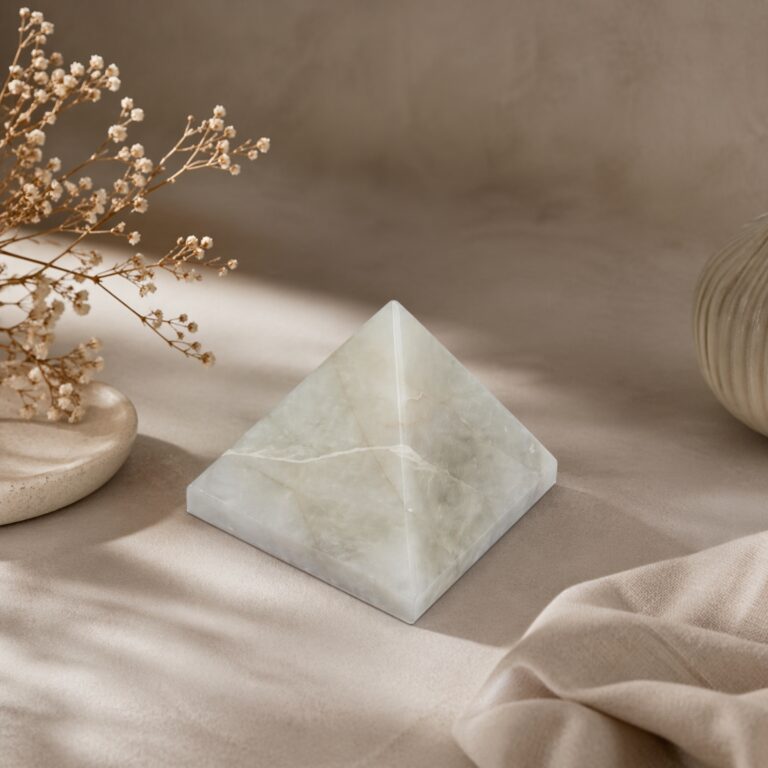
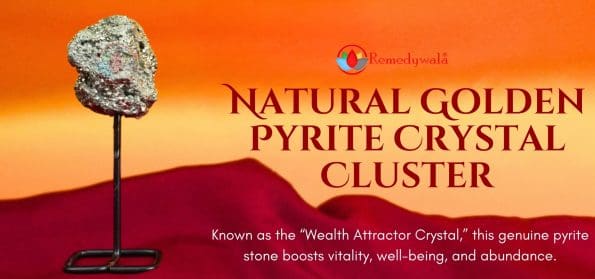
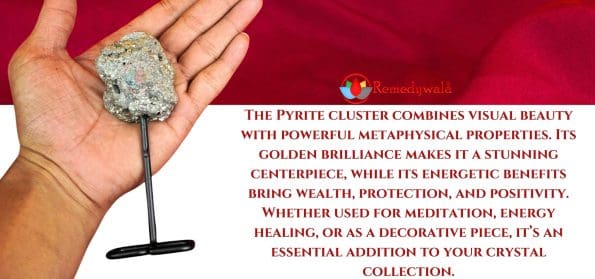
A Natural Golden Pyrite Crystal Cluster is a naturally formed mineral specimen composed of Pyrite (Iron Sulfide – FeS₂), recognized for its brilliant metallic golden appearance and naturally occurring crystal formations. Often called “Fool’s Gold” because it resembles gold, pyrite is valued by mineral collectors, crystal enthusiasts, and those who incorporate crystals into meditation, Reiki, Feng Shui, and Vastu-inspired spaces.
Each cluster is formed by nature over thousands to millions of years, making every piece unique in shape, crystal structure, size, and surface texture. Natural variations, small cavities, and irregular crystal formations are normal characteristics of genuine pyrite.
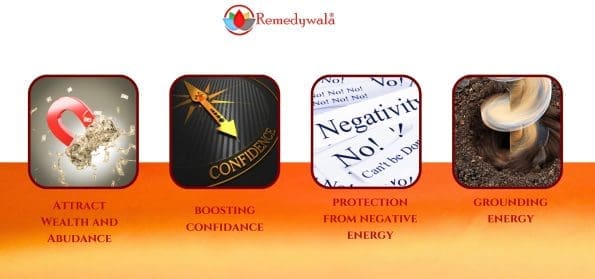
In traditional crystal healing practices, Pyrite is associated with:
Pyrite is traditionally linked with the Solar Plexus Chakra (Manipura), which symbolizes confidence, willpower, personal growth, and purposeful action. Because of its bright metallic appearance, many crystal practitioners also regard it as a symbolic reminder of prosperity, productivity, and resilience.
These interpretations are based on traditional spiritual beliefs and cultural practices rather than scientific evidence.
Many people keep a Pyrite cluster for:
Many users appreciate it as a decorative symbol of confidence, abundance, focus, and perseverance.
This crystal cluster may be suitable for:
It is intended as a decorative and spiritual wellness accessory and is not intended to diagnose, treat, cure, or prevent any medical condition.
Many people choose Pyrite clusters as decorative reminders to stay focused, optimistic, and committed to long-term goals.
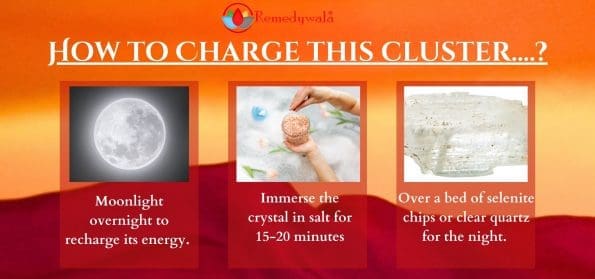
Proper care helps preserve the natural metallic finish and crystal structure.
A Natural Golden Pyrite Crystal Cluster is a naturally occurring mineral specimen composed of iron sulfide (FeS₂). It is valued for its metallic golden appearance and is commonly displayed as a decorative crystal or collectible mineral.
Pyrite is commonly called “Fool’s Gold” because its metallic golden color resembles real gold, although it is a completely different mineral.
In traditional crystal healing practices, Pyrite is associated with confidence, motivation, determination, positive thinking, personal strength, and an abundance mindset.
Pyrite is traditionally associated with the Solar Plexus Chakra (Manipura), which symbolizes confidence, willpower, and personal empowerment.
Yes. Many people display Pyrite clusters on office desks, study tables, workspaces, and reception areas as decorative crystal specimens.
Yes. Since Pyrite forms naturally, each cluster varies in crystal shape, size, metallic texture, and natural formations.
Yes. Many people include Pyrite clusters in Feng Shui-inspired and Vastu-inspired decorative arrangements as symbolic décor.
Yes. It is suitable for both beginners and experienced crystal enthusiasts.
Yes. It makes a thoughtful gift for mineral collectors, crystal enthusiasts, entrepreneurs, students, and anyone interested in natural crystal décor.
Dust it gently with a soft dry cloth. Keep it dry, avoid harsh chemicals, and protect it from prolonged exposure to moisture.
No. Traditional crystal healing practices associate Pyrite with prosperity and confidence as symbolic qualities. There is no scientific evidence that a Pyrite cluster guarantees wealth, financial success, or specific life outcomes. It should be viewed as a decorative and spiritual wellness item inspired by traditional beliefs.
Sale
Sale
Sale
Sale
Sale
Sale
Sale
Sale
Sale
Sale
Sale
Sale
Please sign in to save products to your wishlist.
Enter your registered email address and we'll send you a reset link.